Vivaahli
Biodata format guide

Marriage biodata format that families can scan quickly

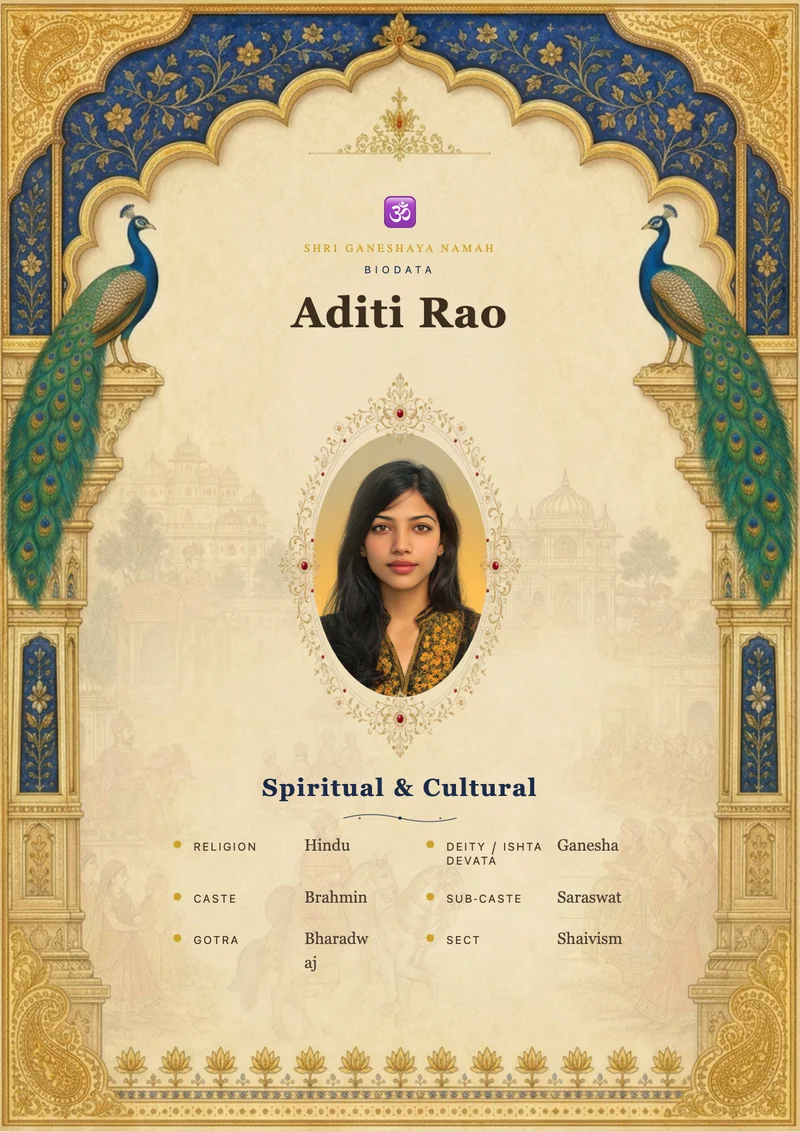
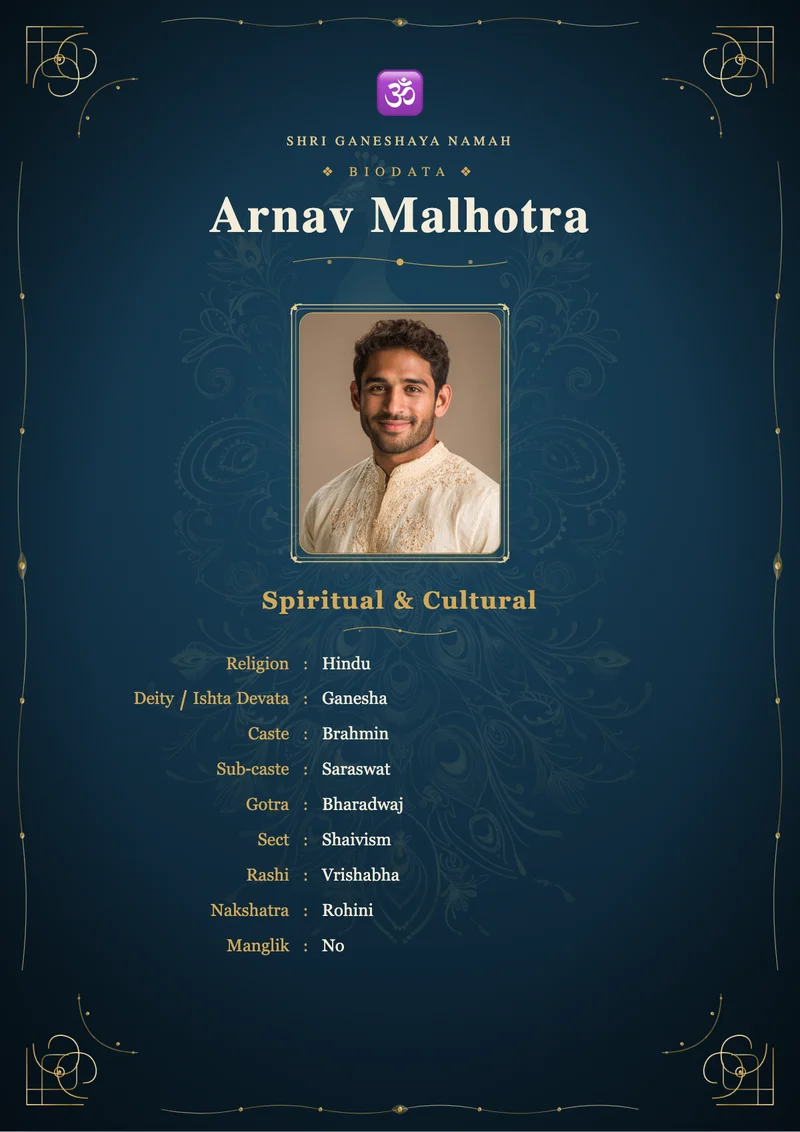
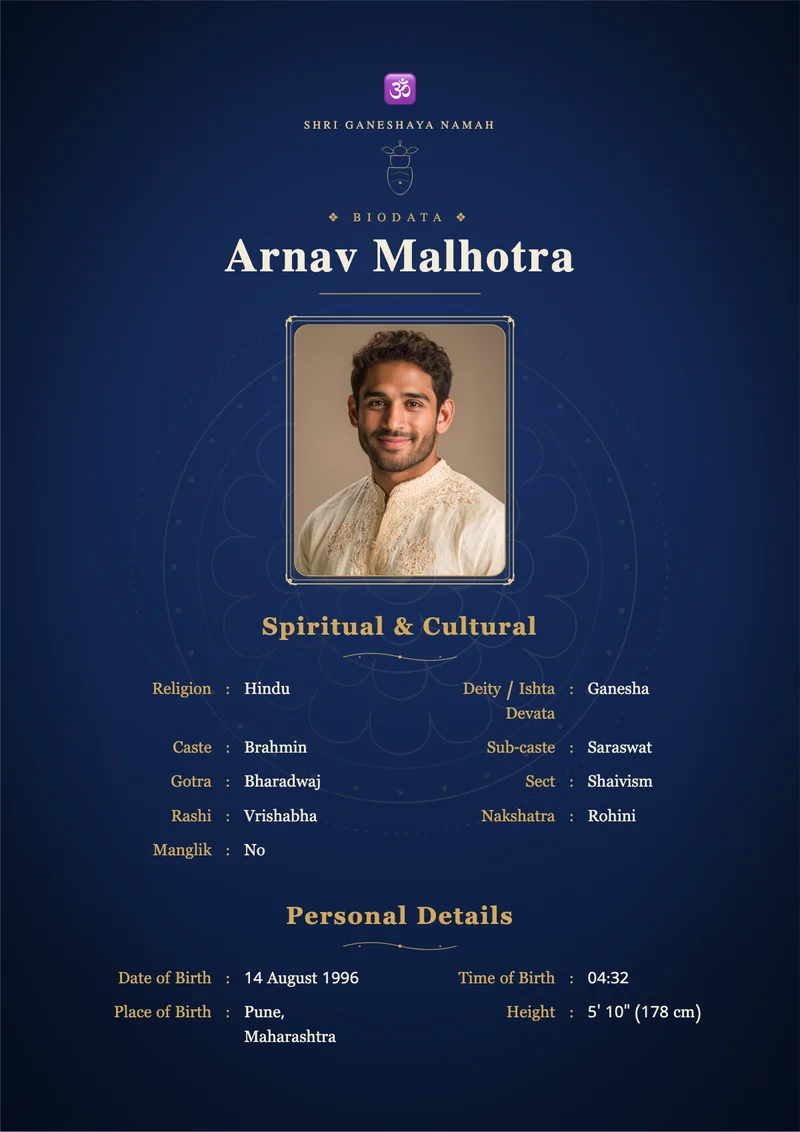
A strong marriage biodata is clear, complete, and easy for families to review. Vivaahli gives you the standard format with beautiful templates so you are not starting from a blank page.

Supports English, Hindi, Marathi, Gujarati, Tamil, Telugu, Bengali, Punjabi, Kannada and Malayalam biodata labels.

Step by step

How to create your biodata in 5 minutes

No signup, no Word formatting. Follow these steps to build a marriage biodata your family can share on WhatsApp or print.

  1. 1

    Pick a designer template

    Browse traditional, royal, or modern layouts tuned for Indian matrimonial sharing.

  2. 2

    Fill personal and family details

    Add only what you want — personal, spiritual, education, career, family, and partner preferences.

  3. 3

    Preview live before you pay

    The preview you see is exactly what the PDF will look like — fonts, photo, borders, and spacing.

  4. 4

    Pay once at checkout

    Basic from ₹99, Premium from ₹199. No subscription, no watermark after payment.

  5. 5

    Download and share

    Get a print-ready PDF instantly. Premium includes a shareable digital biodata link.

What to include

The standard format includes personal details, religion and community, kundli or horoscope information when relevant, education, occupation, family background, partner expectations, and contact details.

  • Personal and birth details
  • Education, occupation, and income
  • Family background and partner preferences

PDF is best for sharing

Families usually share biodatas over WhatsApp and email. PDF keeps spacing, fonts, photos, and borders consistent on every phone.

  • Stable layout across devices
  • Professional print output
  • Easy to forward to relatives and matchmakers

Standard marriage biodata format

Indian families scan these sections first. Include what applies to your community — skip anything that does not.

  • Personal details — name, date of birth, height, complexion
  • Religion and community — religion, caste, sub-caste, gotra
  • Horoscope — rashi, nakshatra, birth time, manglik status
  • Education — degrees, college, year
  • Career — occupation, employer, income
  • Family — parents, siblings, native place, family values
  • Partner preferences — age, education, location, expectations
  • Contact — phone, email, city (and family contact if preferred)
Common questions

What is the best format for marriage biodata?

The best format is one page when possible, with sections for personal details, community details, education, profession, family, partner preferences, and contact information.

Should I include horoscope details?

For Hindu and some regional communities, details like rashi, nakshatra, gotra, birth time, and manglik status are commonly included.

Can I use the same format for a boy or girl?

Yes. The core structure is the same; you can adjust emphasis around career, education, family details, and partner expectations.

How long should a marriage biodata be?

One to two A4 pages is ideal. Families prefer a single scannable page with clear section headings.

Should boys and girls use different formats?

The section structure is the same. Boys may emphasize career and income; girls may emphasize education and family background — adjust emphasis, not the layout.

Can I download the format as PDF?

Yes. Vivaahli applies your details to a designer template and exports a print-ready PDF.

Does the format support regional languages?

Yes. Biodata section labels are available in ten Indian languages while your typed details stay in the script you prefer.

Related pages

Keep exploring formats, languages, and guides connected to this topic.

More biodata guides

Explore formats, languages, states, and communities for Indian marriage biodatas.

Marriage Biodata Format | Sections, Examples and PDF Templates · Vivaahli